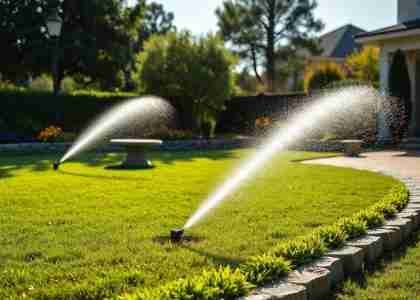


Quenching Your Lawn’s Thirst
We all know that our South Texas sun means business. While those warm, sunny days are perfect for hitting the beach or enjoying your backyard, they also mean your lawn is probably getting pretty thirsty. Watering your lawn isn’t just about grabbing the hose; it’s an art and a science, especially here where water conservation is key and wrong moves can lead to a struggling turf.
Here at Dragonfire Landscaping, as a family-owned and operated business, we’re all about quality and excellence in every aspect of your outdoor space. And a huge part of a healthy, beautiful lawn in our climate is understanding exactly when and how to water it effectively, efficiently, and with water conservation in mind. Let’s ditch the guesswork and get your watering routine on point!
The Golden Rule: Water Deeply and Infrequently
This is the absolute most important principle for watering your lawn in South Texas. Forget those quick, daily sprinkles you might have seen or done in the past.
What it Means: You want to water long enough for the moisture to penetrate deep into the soil (typically 6-8 inches for most lawns), but then allow the top layer of the soil to dry out before watering again.
Why it Works:
Deeper Roots: When water is consistently available at deeper levels, your grass roots are encouraged to grow down to find it. Deep roots make your lawn much more resilient to heat, drought, and stress.
Less Disease: A consistently wet surface is an invitation for fungal diseases (which we’ll talk more about!). Allowing the top soil and grass blades to dry out helps prevent these common Corpus Christi lawn issues.
Water Conservation: Believe it or not, deep and infrequent watering is often more water-efficient than frequent, shallow watering, as less is lost to surface evaporation or runoff.
When to Water: Timing is EVERYTHING in Corpus Christi
This is perhaps the most common mistake homeowners make, and it can actually harm your lawn more than help it.
The Absolute BEST Time: Early Morning
The Window: Aim for watering between 4:00 AM and 8:00 AM.
Why it’s the Best:
Minimal Evaporation: Temperatures are coolest, and winds are generally calmest during these hours. This means less water is lost to evaporation before it can soak into the soil and reach the roots. More bang for your buck!
Optimal Absorption: The soil has had all night to cool down, making it more receptive to absorbing water efficiently.
Crucial Drying Time: This is the most important reason. Watering in the early morning allows the grass blades to dry completely as the sun rises and temperatures begin to warm up. This dramatically reduces the period of leaf wetness, which is the prime condition for many common fungal diseases (like Brown Patch, which loves our humidity) to thrive.
Prepares for the Day: Your lawn gets a good drink before the heat of the day kicks in, helping it withstand the stress of the intense South Texas sun.
When to AVOID Watering: Evening/Night & Midday
Late Evening/Night (After 6:00 PM to Before 4:00 AM):
The Trap: This seems logical (less evaporation!), but it’s the most common time for disease problems. Grass blades stay wet for too long (sometimes 10+ hours), creating a perfect breeding ground for fungal diseases.
The Risk: Fungal diseases can spread rapidly, causing significant damage that’s difficult and costly to treat.
Midday (10:00 AM to 4:00 PM):
The Waste: Watering during the hottest part of the day is highly inefficient. High temperatures and strong winds lead to rapid evaporation, meaning much of your water never even reaches the roots. You’re effectively watering the air.
The Stress: While the water can provide some immediate relief, the combination of intense sun and sudden water can also shock the grass, and the benefit is quickly lost.
How Much Water: The Right Amount for Thriving Turf
The amount of water your lawn needs depends on several factors, but a general guideline is key.
General Guideline: 1 Inch Per Week (or as Needed): Most established lawns need about 1 inch of water per week, either from rainfall or irrigation. This can be delivered in one or two deep watering sessions.
Factors Influencing Needs:
Grass Type: St. Augustine grass is typically more water-demanding than Bermuda or Zoysia once established.
Soil Type: Sandy soils drain quickly and may need more frequent (but still deep) watering. Clay soils hold water longer and need less frequent watering to avoid waterlogging. Our Corpus Christi soils can vary greatly!
Temperature & Humidity: In scorching heat and dry spells, your lawn will naturally need more water. During cooler, humid periods, it might need less.
Sun Exposure: Full sun areas dry out faster than shaded areas.
How to Measure 1 Inch:
Tuna Can Test: Place empty tuna cans or straight-sided containers in different areas of your lawn. Run your sprinklers for a set amount of time (e.g., 15-20 minutes). Measure the amount of water collected in the cans. This tells you how long it takes your system to deliver a specific amount of water. For example, if it takes 20 minutes to collect ½ inch of water, then you need to run your sprinklers for 40 minutes to deliver 1 inch.
Rain Gauge: For natural rainfall, a simple rain gauge will help you track how much Mother Nature is contributing.
The Screwdriver Test: After watering, push a long screwdriver or a soil probe into the lawn. It should easily penetrate 6-8 inches. If it’s a struggle, you need to water longer.
Water-Saving Lawn Care Tips for Corpus Christi
Beyond just when and how you water, integrating these water-saving practices will make your lawn more resilient and reduce your overall consumption.
Mow High: This is a super simple, yet powerful tip! Set your mower blades to their highest setting (2.5-3 inches for most grass types). Taller grass blades shade the soil, keeping it cooler and significantly reducing water evaporation. This also encourages deeper root growth.
Know Your Grass Type: As we’ve discussed, Bermuda and Zoysia are generally more drought-tolerant once established than St. Augustine. If you’re starting a new lawn or considering an overhaul, pick a grass that aligns with your water conservation goals.
Aerate Annually (If Needed): If your soil is compacted (which is common in South Texas, especially with heavy foot traffic), water won’t penetrate effectively. Core aeration helps break up compaction, allowing water, air, and nutrients to reach the roots, making your watering more efficient. Do this during your grass’s peak growing season (late spring/early summer for warm-season grasses).
Mulch, Mulch, Mulch: While mainly for garden beds, applying a 2-4 inch layer of organic mulch can dramatically reduce water evaporation from the soil around trees and shrubs, keeping their roots moist longer. It also suppresses weeds that compete for water.
Address Weeds: Weeds are water thieves! They compete directly with your grass for every drop of moisture. Keep your lawn weed-free through proper mowing, targeted treatments, or pre-emergent applications.
Fix Sprinkler Issues Promptly: Leaky sprinkler heads, broken lines, or misaligned spray patterns are huge water wasters. Regularly inspect your irrigation system for any problems and fix them immediately. A single leaky sprinkler can waste thousands of gallons of water over a season.
Consider Smart Controllers: If you have an automated irrigation system, consider upgrading to a smart controller. These devices use local weather data, soil type, and plant needs to automatically adjust watering schedules, significantly optimizing water use.
Reduce Lawn Area: For areas that are difficult to water efficiently, or if you simply want to reduce your lawn’s footprint, consider replacing thirsty turf with drought-resistant plants or attractive hardscaping elements like patios or walkways. This is a big step, but it offers significant long-term water savings.
Don’t Over-Fertilize: Excessive nitrogen fertilization can lead to rapid, shallow growth, which makes your lawn more water-dependent. Fertilize based on soil test results and your grass’s actual needs, using slow-release formulas.
Listen to Your Lawn (and Local Conditions): Pay attention to the weather forecast and how your lawn looks. If we’ve had recent heavy rainfall, you can skip an irrigation cycle. If your grass shows early signs of heat stress (lingering footprints, dull blue-green color), it’s telling you it needs water now.
Your Lawn’s Best Life in South Texas
Mastering the art of watering in South Texas is one of the most impactful things you can do for your lawn’s health, beauty, and your wallet. By focusing on deep, infrequent watering in the early morning and integrating smart water-saving practices, you’ll be giving your Corpus Christi lawn exactly what it needs to thrive, even under our famous sun.
Here at Dragonfire Landscaping, our family-owned and operated business is dedicated to bringing quality and excellence to your entire outdoor space. We can help you assess your watering needs, optimize your irrigation, and implement water-saving solutions that keep your lawn lush and beautiful.
Contact us today for a consultation, and let’s get your lawn perfectly hydrated and resilient for whatever the South Texas weather throws its way!